


Energy in machines never really “rests.” It hides inside valves, wires, gears, pipes. When someone repairs a machine and energy suddenly moves, people get hurt. A cable lockout stops this. It blocks energy. It reduces risk. It keeps workers safe.
This guide explains cable lockouts in simple, practical language. If you run a workplace or manage equipment, you’ll find everything you need here.
A cable lockout is a flexible lockout device used to secure one or multiple energy-isolating points. Instead of relying on a rigid clamp, it uses a long, durable cable that loops around valves, handles, levers, or electrical switchgear. Pull the cable tight, lock the tension mechanism, insert a padlock—now the equipment stays off.
This flexibility matters. Many machines have irregular shapes, oversized wheels, or cluttered layouts. A rigid device simply cannot reach or fit. A cable lockout solves these problems because it bends, wraps, and adjusts easily around almost anything.
Workers use it on valves, electrical panels, breakers, control handles, and grouped isolation points. One device can manage several hazards in one go, which makes it incredibly useful during shutdowns, maintenance, or emergency repairs.
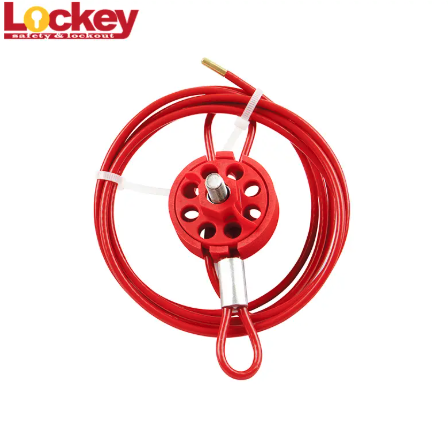
Cable lockouts look simple. But each part is engineered to survive tough industrial environments and deliver reliable isolation.
Lockout body:Impact-resistant housing made from strong plastic or metal
Flexible cable:Steel-core or non-conductive nylon
Clamping / tensioning mechanism:Secures the pulled cable in place
Padlock holes:Supports single or multiple workers (group lockout)
Some models hold 3–6 padlocks. Others integrate a hasp function so multiple technicians can attach personal locks.
Different materials change how the lockout performs in the field. Here’s a quick breakdown:
| Component | Material | Purpose & Benefits |
|---|---|---|
| Cable | Steel or nylon | Steel handles heat, pressure, mechanical force. Nylon insulates electricity and avoids sparks. |
| Housing | Polycarbonate or aluminum | Polycarbonate resists impact + chemicals; aluminum tolerates high temperatures. |
| Coating | PVC or nylon | Stops corrosion, improves grip, boosts durability in wet or dusty sites. |
Bright colors—usually red, yellow, or orange—ensure every worker can spot the lockout instantly, even in dim or crowded spaces.
A cable lockout works through tension, and the process is simple but extremely reliable. You loop the cable—often steel-core or nylon—around the energy-isolating point such as a valve wheel, breaker handle, or control lever. After that, you pull the cable tight to remove slack, snap the device shut, and attach a padlock. The tensioning mechanism clamps the cable inside the housing, so once locked, it cannot slip or loosen.
An adjustable cable lockout gives workers even more control because they can tighten the cable to match the exact shape or distance of the isolation point. This flexibility ensures the device stays secure even on oddly sized or irregular equipment.
A cable lockout adapts to many situations where rigid devices fall short:
Handles on valve wheels that lack built-in locking points
Electrical switchgear with multiple toggles or disconnect handles
Clusters of valves requiring one device to secure them all
Oversized gate valves in water, gas, or utility networks
Control levers on manufacturing lines that move differently each cycle
In each case, an adjustable cable lockout wraps around the component and applies consistent tension, making accidental movement nearly impossible.
Cable lockouts are the go-to solution when equipment design or layout prevents the use of traditional LOTO tools. They shine in complicated or confined spaces where technicians must secure irregular shapes or multiple isolation points. Their ability to wrap, tighten, and lock without any modification to the equipment is what makes them so effective.
You should use a cable lockout—especially an adjustable cable lockout—when:
Equipment has no fixed locking hole or tab
Handles, wheels, or levers vary in size and shape
Multiple energy sources must be isolated at the same time
Maintenance happens in tight or hard-to-reach areas
Equipment sits outdoors, runs hot, or operates in harsh conditions
Because the cable can conform to almost any geometry, it becomes a universal tool in a technician’s LOTO kit.
Cable lockout procedures work best when every step follows a clear sequence. Many facilities rely on an all purpose cable lockout because it adapts to almost any machine and simplifies the workflow. Below is a practical step-by-step method that organizations use to stay compliant and safe.
Start by locating every type of energy that could hurt someone. It might be electrical power inside a control panel, hydraulic pressure inside hoses, stored pneumatic air, or even gravity pulling down heavy parts. Some machines hide energy in springs, heated pipes, or rotating components. A quick walk-around helps teams spot these sources before they touch anything.
A short, direct procedure works better than a long technical document. It should show:
Where the isolation points sit
Which lockout device to use (including when to use an all purpose cable lockout)
How to confirm that all energy is fully released
Clear, illustrated procedures help workers apply the right device each time without guessing.
Once the machine is shut down, workers isolate each energy source. Then they take the cable lockout, wrap the cable around the chosen points, remove slack, and secure the housing. After pulling the cable tight, the padlock goes on. A tag follows to show who applied the lockout and why.
An all purpose cable lockout makes this step easier because it fits small levers, large valve wheels, and clustered isolation points without switching tools.
After everything is locked, try to start the machine using normal controls. Nothing should respond—no rumble, no click, no movement. This “try-start” test confirms that the equipment is truly de-energized. If anything moves or hums, stop and recheck isolation points.
Tell nearby workers about the lockout so no one tries to operate the machine. Record the task in your maintenance log or permit system. Good communication prevents confusion and ensures everyone understands why the equipment is out of service.
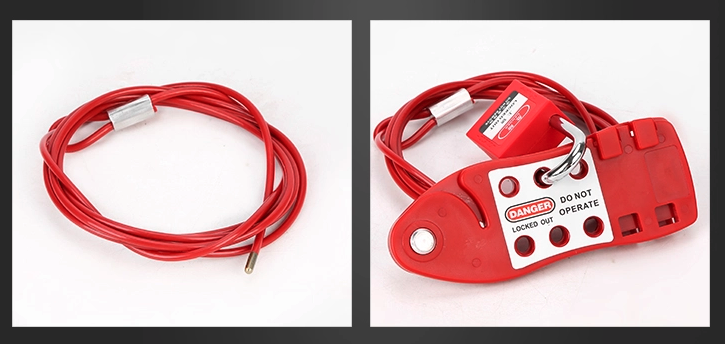
Cable lockouts stay reliable when they’re taken care of. Even the toughest devices wear down from heat, moisture, chemicals, and constant handling. A well-maintained lockout—not just the standard cable style, but also specialty tools like a battery cable lockout—keeps equipment secure and protects everyone working nearby.
Look for issues that could weaken the device or cause it to slip during use:
Cable fraying or broken strands
Rust on steel parts or chemical discoloration
Housing cracks from impacts or temperature swings
A tension mechanism that sticks or feels gritty
Padlock holes stretched, bent, or misaligned
These small problems can compromise the device, especially when isolating energized panels or battery-powered equipment where stability matters.
Routine checks catch issues before they become safety risks:
Before each use:Quick visual scan for damage
Monthly:A deeper inspection for the entire lockout inventory, including battery cable lockout tools
Annual review:Confirm the LOTO program still meets regulations and your facility’s equipment changes
Regular inspection builds worker confidence and reduces downtime.
These examples show how cable lockouts—and occasionally battery cable lockout devices—solve real safety challenges across different work environments.
A food processing plant relies on cable lockouts for multi-valve steam lines. One long cable secures several valves at once, avoiding the need for multiple clamps. The team works faster, stays farther from hot pipes, and reduces exposure during shutdowns. Their battery-powered control carts also use a small battery cable lockout to keep terminals isolated during servicing.
Utility operators isolate large outdoor gate valves using steel-core cable lockouts built to handle heat, moisture, and dust. The flexible design wraps around oversized handles that traditional lockouts can’t grip. In some stations, technicians use battery cable lockout devices on backup battery banks to prevent accidental energization during testing.
Portable generators, switches, and temporary panels usually have no fixed locking points. A cable lockout wraps around quick-release levers or latch bars so electricians can work without fear of sudden reactivation. On hybrid generators with onboard batteries, a battery cable lockout helps isolate the terminals safely.
HVAC technicians use cable lockouts on isolation switches that sit high on walls or inside tight mechanical rooms. These devices prevent maintenance teams or outside contractors from restarting units mid-repair. For emergency lighting systems that run on internal batteries, a small battery cable lockout ensures the circuit stays open during service.
It is used to secure valves, levers, breakers, and other isolation points so energy cannot move during maintenance.
It bends and wraps around irregular shapes, while rigid devices fit only specific equipment.
Yes, one long cable can isolate several valves or handles at the same time.
Use it when equipment varies in size, shape, or distance and you need precise tension.
Yes, especially models made with non-conductive nylon cables designed for electrical isolation.
Cable lockouts remain one of the most adaptable and reliable tools for controlling hazardous energy. Their ability to wrap, tighten, and secure almost any isolation point makes them essential in modern LOTO programs—whether you’re locking out a single valve or multiple energy sources across a busy facility. By choosing high-quality devices, training your team, and inspecting equipment regularly, you strengthen safety, reduce downtime, and protect every worker who relies on stable, predictable energy control.
For companies seeking durable, industry-proven solutions, Lockey Safety Products Co., Ltd. delivers a full range of cable lockouts engineered for manufacturing plants, utilities, construction sites, and commercial buildings. With robust materials, ergonomic designs, and global compliance standards, Lockey helps organizations build safer worksites and implement lockout/tagout programs they can trust.


