
Views: 268 Author: Site Editor Publish Time: 2025-12-17 Origin: Site


Written Lockout Tagout (LOTO) procedures act as the software of industrial safety, dictating the rules of engagement. However, physical lockout stations are the hardware that makes strict compliance physically possible. Without a designated home for safety assets, facilities face a dangerous reality. Disorganized locks and tags frequently lead to "workarounds," where technicians skip isolation steps because they cannot find the right device quickly. This disorganization causes increased downtime while staff searches for gear and invites severe OSHA violations, specifically regarding standard 1910.147.
A lockout station is not merely a storage unit or a passive shelf. It functions as a centralized visual management tool that standardizes equipment isolation. It ensures your facility remains audit-ready at all times. By centralizing these critical assets, you reduce friction in the safety workflow. In this guide, we move beyond simple definitions to cover station architectures, strategic placement models, and the buy-vs-build decision framework for your safety infrastructure.
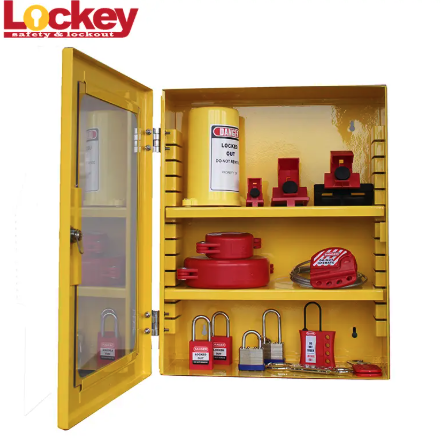
Compliance Hub: A station serves as the dedicated "home base" for isolation devices, preventing the loss of high-value safety assets.
Visual Accountability: Shadow boards and clear casings provide immediate visual cues on missing equipment or active lockouts.
Efficiency Driver: Strategic placement reduces "walking time" for maintenance staff, directly impacting Mean Time to Repair (MTTR).
Configuration Choice: The decision between lockout station kits (fully stocked) and empty boards depends on the maturity of your existing LOTO inventory.
To the untrained eye, these stations might look like simple yellow boards with hooks. However, a high-functioning station is engineered with specific anatomical features designed to drive behavioral safety. You must understand the physical structure and the essential contents that transform a board into a compliance system.
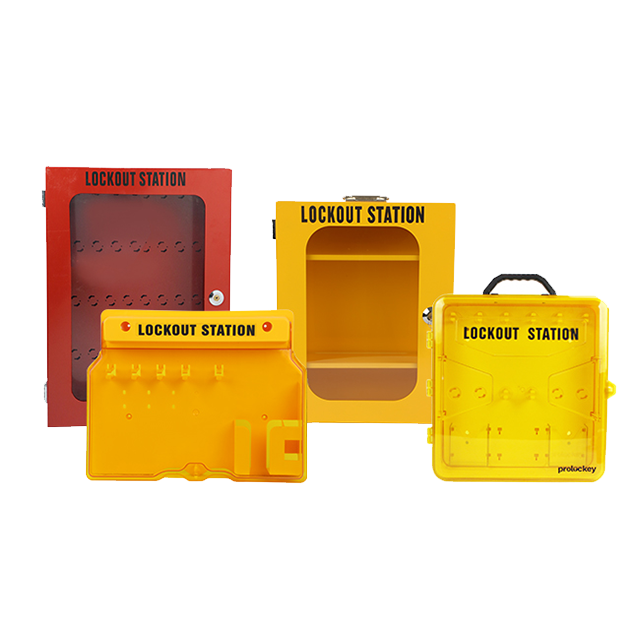
The environment dictates the structure. Facilities typically choose between open-face lockout station boards and enclosed cabinets. Open boards offer high visibility, allowing supervisors to audit inventory from across the shop floor without touching the unit. In contrast, enclosed cabinets are necessary for dusty, grimy, or washdown environments where devices need protection from the elements.
Material selection is equally critical. For harsh industrial environments, you should avoid brittle consumer-grade plastics. Look for heavy-duty acrylic, powder-coated steel, or chemical-resistant polycarbonate. These materials withstand the rigors of factory floors, resisting cracking when bumped by forklifts or corroding when exposed to chemical fumes.
A station is only as effective as its inventory. While padlocks are the most obvious component, a complete station houses a diverse ecosystem of hardware:
Isolation Hardware: This includes padlocks (which may be keyed different or keyed alike depending on the policy), hasps for group lockout, breaker lockouts, and valve covers.
Information Layer: A robust station includes compartments for tagout tags, procedural checklists, and authorized personnel logs.
Instructional Materials: A frequently overlooked component is the permit or procedure slot. A station is incomplete if it does not provide immediate access to the written procedures required to perform the lockout safely.
Visual management is a cornerstone of lean manufacturing, and it applies directly to safety. Many modern lockout stations utilize "shadow boarding." This design places a silhouette or outline of the specific tool behind the hanging hook. The shadow concept allows a supervisor or safety manager to spot missing inventory instantly from a distance. If a hasp is missing and no maintenance is scheduled, you know immediately that the item is lost or misplaced. This reduces the time spent counting inventory and increases the time spent on actual safety observations.
One size rarely fits all in industrial safety. The architecture you select should match the workflow of the team using it. We generally categorize these into three primary architectures: fixed wall mounts, portable mobile units, and high-capacity hubs.
The lockout tagout wall mount station represents the industry standard for designated maintenance shops or high-traffic machinery zones. These are permanent fixtures acting as "safe zones."
Best Use Case: Areas with consistent, daily maintenance routines where technicians report to a central location.
Pros: High visibility ensures the safety message is always present. The permanent mounting prevents theft or accidental misplacement of the station itself.
Cons: The fixed nature requires technicians to walk back to the point of storage to retrieve gear, which can create inefficiency in large facilities.
For field service technicians, contractors, or staff managing sprawling facilities like oil refineries, a stationary board is impractical. A lockout station kit offers a mobile alternative. These are often ruggedized cases or pouches containing a universal set of lockout devices.
Best Use Case: Service vans, remote pipeline work, or third-party contractors who travel between sites.
Pros: Unmatched mobility and speed of deployment. The technician carries compliance with them.
Cons: There is a higher risk of inventory loss. It is also harder for safety managers to audit these kits remotely compared to a wall-mounted board.
Large maintenance teams often require more than a simple board. They need a departmental hub capable of holding 20 or more lock positions and bulk storage for complex blocking devices like large gate valve covers. A dedicated lockout tagout station in cabinet form provides this capacity.
Best Use Case: Central maintenance offices supporting 20+ technicians.
Pros: These units often feature lockable doors for security and seals to protect devices from industrial grime and dust.
Cons: They come with a higher upfront cost and require significant wall footprint.
Where you place these stations is just as important as what they contain. You must balance equipment costs against the "efficiency equation." If a technician has to walk ten minutes to retrieve a padlock for a five-minute job, they are statistically more likely to skip the lockout procedure entirely. This is where placement strategy dictates safety culture.
Every minute a machine is down waiting for a safety lock is lost revenue. By placing stations strategically, you reduce "walking time," which directly improves Mean Time to Repair (MTTR). You generally have two models to choose from.
In this model, one master station contains all facility locks and devices. It is typically located in the main maintenance tool room. The logic is simple: all tools are in one place.
However, the risk is high friction. For quick fixes or minor jams, the distance to the tool room becomes a barrier to compliance. This model works best for smaller facilities where the maintenance shop is never more than a minute's walk from the production floor.
This approach involves mounting smaller lockout station board units directly next to specific machinery. For example, a dedicated station might be bolted to a conveyor line column.
The benefit is immediate accessibility. Furthermore, the tools in a decentralized station can be tailored exactly to that machine's energy sources. If a machine is purely pneumatic, the local station only needs air-line lockouts, not electrical breaker locks. This reduces clutter and confusion.
| Factor | Centralized Model | Decentralized (Point-of-Use) |
|---|---|---|
| Facility Size | Small footprint (<20,000 sq ft) | Large, sprawling complex |
| Maintenance Type | Scheduled, major overhauls | High-frequency adjustments/jams |
| Inventory Cost | Lower (shared resources) | Higher (duplicate assets needed) |
| Compliance Risk | Moderate (temptation to skip) | Low (tools are at hand) |
Verdict: Use Centralized models for general facility maintenance teams. Use Decentralized models for critical, high-frequency maintenance assets where uptime is paramount.
When purchasing a lockout tag out station, you face a procurement decision: buy a turnkey, fully stocked solution or buy an empty board and build it yourself.
Turnkey solutions are popular for new facilities. The pros include immediate compliance and standardized hardware. You get color-coded locks and matching keys without managing dozens of SKUs. However, the downside is "bloat." You may pay for filler items—like generic gate valve covers—that do not fit your specific machinery. If 30% of the kit is unusable for your specific hazards, the perceived value drops.
Opting for an empty station allows for a custom build. This is ideal for mature safety programs with existing inventory. It allows you to integrate your current compliant locks and tailor the contents specifically to the facility’s energy hazards. For instance, you can avoid paying for electrical lockouts if the station is designated for a purely hydraulic zone. The trade-off is higher administrative effort to source components separately.
Analyze the Total Cost of Ownership (TCO). A cheap, stocked station often requires replacing generic components that don't fit. If you have to replace the hasps and breakers immediately, the real cost of that "bargain" station skyrockets.
Installing the station is only step one. Implementing it into the daily culture requires clear protocols. A lockout station should be used to enforce your standardization policies.
Use your stations to physically enforce color codes. You might designate Red locks for Mechanical maintenance and Blue locks for Electrical contractors. Organizing the station by color reinforces these assignments visually. If a blue lock is hanging in the red section, a supervisor knows instantly that a protocol has been breached.
You must establish a clear rule regarding empty slots. If a station slot is empty, is it because the lock is in use (Good) or lost (Bad)? Best practice dictates that the station acts as a communication tool. During shift changeovers, a quick glance at the station tells the incoming manager exactly how many authorized employees are currently servicing machines.
Finally, assess the environment before installation. In food processing, you need washdown-safe materials that resist bacteria harbor points. In chemical processing, you need corrosion-resistant hardware. Check for UL validations or specific material grades. Using a standard consumer-grade plastic board in a high-heat foundry will result in warping and failure, rendering the station useless.
A lockout station is more than a plastic board; it is an investment in behavioral safety. It transforms LOTO from an abstract rule in a binder into a tangible workflow on the factory floor. By centralizing tools and providing visual accountability, you remove the barriers that lead to unsafe workarounds.
For most facilities, a hybrid approach works best. We recommend installing large, centralized wall-mounted stations in the maintenance shop, supported by smaller, portable kits for mobile work or decentralized boards at high-risk machinery. Before you select a size, conduct an audit of your current machinery energy sources to ensure your capacity matches your demand.
A: OSHA standard 1910.147 does not explicitly mandate a "station." However, it mandates that devices be durable, standardized, and substantial. Lockout stations are the industry-accepted method for meeting these requirements by keeping devices organized, protecting them from damage, and ensuring they are standardized across the facility.
A: It depends on the risk profile. Locking the station prevents theft and tampering, ensuring assets are there when needed. However, in emergencies, locking the station can delay access. Most facilities prefer non-locked stations for general access or glass-front cabinets that can be broken in an extreme emergency.
A: In modern safety practices, the terms are interchangeable. OSHA regulations require locks to be used whenever possible, supplemented by tags. Therefore, almost all compliant stations are "lockout tagout" stations, containing both padlocks for physical isolation and tags for information.
A: Stations should be mounted to comply with ADA guidelines and general ergonomics. The center of the station is typically placed at eye level, around 60 inches from the floor. Ensure the highest lock is reachable by shorter workers without a step stool to encourage easy access.


